Booking a wedding reception venue is about much more than finding a beautiful room and confirming that your preferred date is available.
The venue can influence your guest count, catering, bar service, décor, entertainment, photography timeline, transportation, budget, and even how smoothly the wedding day moves from one moment to the next.
That is why couples should walk into every venue tour with a clear list of questions.
A strong wedding reception planning checklist helps you understand exactly what you are booking, what may cost extra, what restrictions apply, and whether the venue can realistically support the wedding experience you have planned.
Here are 15 important questions to ask before booking a wedding reception venue.
What Should You Ask Before Booking a Wedding Venue?
Before signing a contract, couples should confirm the venue’s wedding-specific capacity, event availability, ceremony and reception options, included spaces, food and beverage arrangements, pricing, vendor policies, décor rules, entertainment requirements, parking and accessibility, setup and cleanup times, staffing, cancellation policies, payment terms, and estimated total cost.
Most importantly, do not assume that a service is included simply because the venue offers it for another type of event.
Wedding requirements should be confirmed for your specific date and event plan.
1. How Many Wedding Guests Can the Venue Comfortably Accommodate?
Start with your expected guest count.
Instead of asking only for the venue’s maximum occupancy, explain the type of reception you are planning.
Dining tables, a dance floor, DJ or band setup, sweetheart table, cake display, photo area, décor installations, and other wedding elements all use space.
A room’s comfortable wedding capacity may therefore be different from its capacity for a cocktail event, nightclub table booking, dinner reservation, or other gathering.
Ask the venue:
- How many guests can comfortably attend in your preferred layout?
- Is seated capacity different from cocktail-style capacity?
- How much room remains for dancing and entertainment?
- Can the venue provide or discuss possible floor plans?
If you are considering PREVA, confirm wedding-specific guest capacity directly with the events team. Online dining or VIP table reservation limits should not automatically be interpreted as the total capacity for a private wedding reception.
2. Is Our Wedding Date Available, and What Times Are Available?
Finding an available date is only the beginning.
Ask when vendors can enter, when setup can start, when guests can arrive, how long the reception can run, and when breakdown must be completed.
Event schedules may differ from standard restaurant or nightlife operating hours.
That distinction is important because a venue’s normal business hours do not necessarily tell you when a private wedding can be scheduled.
For PREVA wedding inquiries, event dates, setup times, reception hours, and breakdown requirements should be confirmed directly with the events team based on availability.
Getting those details in writing can prevent timeline problems later.
3. Can We Hold Both the Ceremony and Reception at the Venue?
Some couples want one location for the ceremony and reception. Others only need a reception venue after holding the ceremony elsewhere.
Do not assume every reception venue also accommodates wedding ceremonies.
Ask whether the venue can support:
- Ceremony seating
- A ceremony focal point or altar area
- Guest arrival before the ceremony
- A transition from ceremony to cocktail hour
- Room changes or resets
- Reception seating afterward
If you only need a wedding reception, this may not matter. But if you want the entire wedding at one location, confirm ceremony capability before booking.
Couples considering PREVA should ask the events team specifically whether their proposed event involves a reception only or ceremony plus reception, and what arrangements are available for that date.
4. Exactly Which Spaces Are Included in Our Booking?
A venue may contain multiple areas, but that does not mean every space comes with your wedding rental.
Ask exactly what your booking includes.
Depending on the property and package, couples may need areas for guest arrival, cocktail hour, dinner, dancing, photographs, wedding-party preparation, gifts, coats, desserts, or private moments before the reception.
If having a bridal suite, groom’s room, dressing area, or private getting-ready space matters to you, ask specifically whether one is available.
Do not assume a dedicated bridal or preparation room exists unless the venue confirms it.
You should also clarify whether other guests or events could use another section of the property at the same time.
5. What Is Included in the Wedding Venue Price?
Never compare wedding venues using the headline rental price alone.
Ask for a detailed explanation of what the quoted amount actually includes.
Potential costs can involve:
- Venue rental
- Food
- Bar service
- Staffing
- Security
- Tables and chairs
- Linens
- Glassware and dinnerware
- Audio or visual equipment
- Setup
- Cleanup
- Overtime
- Service charges
- Taxes
- Additional room rental
- Special equipment
Not every venue charges for these items in the same way.
If PREVA offers specific wedding packages, minimum spending requirements, per-person pricing, or package inclusions for your date, those details should come directly from PREVA’s current wedding information and events team.
You can start by reviewing the PREVA wedding information before requesting a customized event discussion.
6. How Will Catering Work for the Wedding Reception?
Food is one of the biggest parts of the guest experience, so catering should be discussed early.
Ask whether food is prepared by the venue, whether outside catering is permitted, what service styles are available, and whether the menu can be adjusted for your reception.
You may also want to ask about:
- Dietary restrictions
- Vegetarian options
- Food allergies
- Children’s meals
- Cocktail-hour food
- Dinner service
- Late-night food
- Dessert or cake arrangements
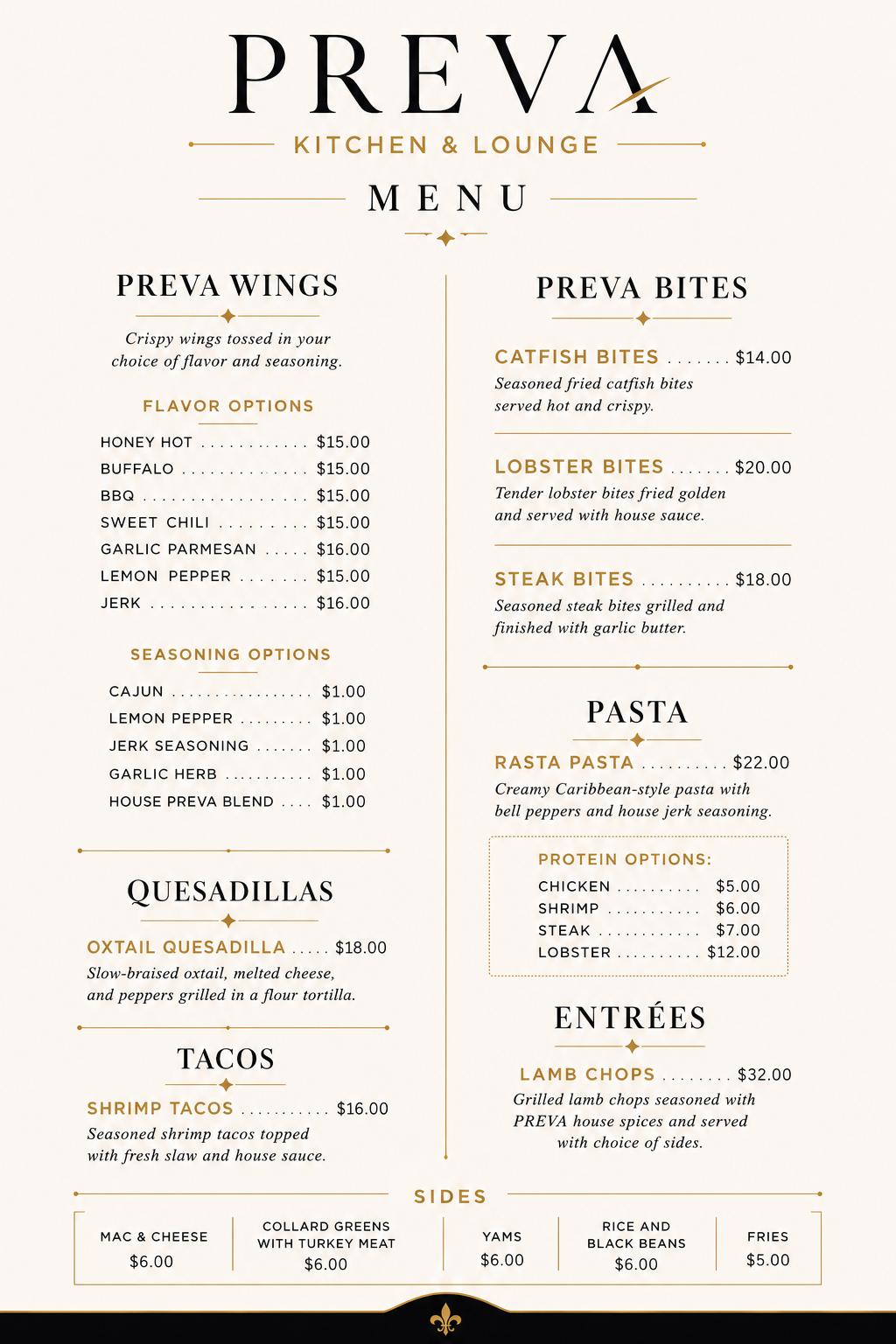
If you are considering PREVA, reviewing the current PREVA Kitchen menu can help you understand the restaurant’s current food direction.
However, a restaurant menu should not automatically be treated as a wedding catering menu. Couples should confirm event-specific food selections, availability, serving formats, pricing, and customization options directly with the events team.
7. What Are the Bar and Alcohol Options?
Bar arrangements can have a significant effect on both the guest experience and the wedding budget.
Ask how alcohol service is structured and what options are available for your reception.
Important questions can include whether the venue offers hosted bar options, limited selections, consumption-based billing, drink packages, cash-bar arrangements, or other formats.
Also ask:
- Are bartenders included?
- Are there beverage minimums?
- Can outside alcohol be brought in?
- When does bar service end?
- Are non-alcoholic beverage options included?
- How are specialty cocktails handled?
Do not assume that regular nightlife bottle service or bar pricing automatically applies to a private wedding.
Get the wedding-specific beverage arrangement and associated costs in writing.
8. What Furniture, Equipment and Wedding Setup Items Are Included?
Tables and chairs may seem like basic necessities, but wedding venue packages vary considerably.
Ask whether your venue provides the items you need and whether they are included in the quoted price.
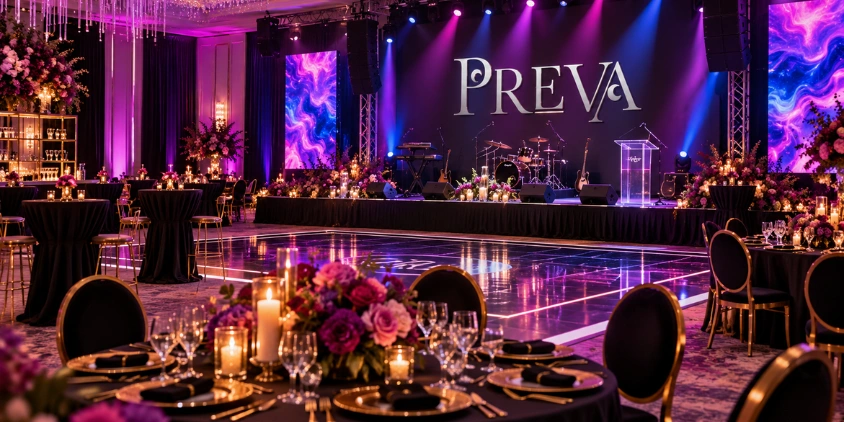
Possible items include dining tables, cocktail tables, chairs, linens, tableware, staging, microphones, speakers, lighting equipment, screens, podiums, and other reception infrastructure.
If something is not included, ask whether you may rent it from an outside vendor.
This is also the right time to confirm whether the venue handles room setup or whether your planner and vendors will be responsible.
For PREVA, couples should confirm any wedding-specific furniture, décor, equipment, or setup inclusions directly rather than assuming that equipment used during regular dining or nightlife operations is included with a private wedding.
9. Can We Bring Our Own Wedding Vendors?
If you already have a photographer, videographer, DJ, florist, decorator, wedding planner, or cake vendor in mind, find out whether the venue allows outside professionals.
Some venues maintain preferred-vendor lists. Others have required vendors for certain services or allow outside vendors subject to insurance, licensing, setup, or approval requirements.
Ask before signing the contract.
You should know:
- Which vendors you may choose independently
- Whether any vendors are mandatory
- Whether vendors need insurance
- When vendors can access the venue
- Whether additional vendor fees apply
For PREVA, vendor policies should be confirmed for the specific wedding rather than assumed from other private events.
10. Can the Venue Support Our DJ, Band or Entertainment Plan?
Music can shape the entire atmosphere of a wedding reception.
Whether you are planning a DJ, live band, MC, cultural performance, or another entertainment format, explain your plan to the venue before booking.
Ask about:
- Performance space
- DJ or band positioning
- Electrical access
- Sound systems
- Microphones
- Dance-floor space
- Setup and sound-check times
- Sound restrictions
- Equipment requirements
A venue that regularly hosts entertainment may already have useful infrastructure, but that does not automatically mean every system or piece of equipment is included in a private wedding booking.
Confirm exactly what your wedding package provides and what your entertainment vendor needs to bring.
11. What Are the Rules for Wedding Décor?
Décor can transform a reception space, but venues often have rules designed to protect the property and keep events safe.
Before paying deposits to decorators, ask what is permitted.
Discuss plans involving flowers, candles, balloons, backdrops, signs, hanging installations, ceiling décor, confetti, sparklers, specialty lighting, photo booths, and any other decorative feature you intend to use.
Ask:
- Can items be attached to walls or ceilings?
- Are open flames permitted?
- Can furniture be moved?
- Who installs the décor?
- When can decorators enter?
- Who removes everything afterward?
Never assume a décor installation is acceptable just because you saw something similar at another wedding.
Venue approval should come first.
12. What Are the Parking, Transportation and Accessibility Options?
Guest arrival is part of the wedding experience.
Ask how parking works for your event instead of relying on a general statement that parking is available.
Couples should confirm questions such as:
- Where will wedding guests park?
- Is parking included or paid?
- Is valet available?
- Is valet complimentary or an additional service?
- Is there a rideshare drop-off point?
- Can buses or shuttles access the property?
- Are entrances and restrooms accessible to guests with mobility needs?
Avoid assuming specific parking-space counts, complimentary valet service, or guaranteed parking arrangements unless those details are confirmed for your event.
For guests who will be drinking, also consider how everyone will safely leave the reception.
13. Who Will Be Our Venue Contact on the Wedding Day?
One common planning mistake is assuming that a venue coordinator automatically performs the same role as a full-service wedding planner.
They may not.
Ask who will represent the venue on your wedding day and exactly what that person is responsible for.
Will they manage the room setup? Coordinate venue staff? Communicate with your caterer? Help cue wedding events? Handle vendor questions? Or focus primarily on venue operations?
There is no universally correct answer.
What matters is understanding where the venue’s responsibilities end and where your planner, coordinator, or wedding party needs to take over.
If PREVA provides any event-coordination or wedding-management services, confirm the exact scope directly with the events team.
14. What Happens If We Need to Cancel, Postpone or Change Our Plans?
No couple expects to postpone a wedding, but contracts need to account for unexpected changes.
Before making a deposit, understand the venue’s policies regarding:
- Cancellation
- Postponement
- Date changes
- Deposits
- Refunds
- Final payments
- Guest-count changes
- Event modifications
If your plan involves any outdoor component, also ask what happens if weather affects the event.
Do not rely on verbal assurances for important financial terms. The contract should explain what happens if circumstances change.
Read it carefully before signing.
15. What Will Our Real Estimated Wedding Cost Be?
After discussing the venue, food, beverages, staffing, equipment, vendors, timing, décor, and other requirements, ask for the clearest possible estimate of your total cost.
The initial venue fee may not tell the whole story.
Ask which expenses are fixed, which depend on guest count, and which could increase if your reception runs longer or your plans change.
You should also understand:
- Deposit amount
- Payment schedule
- Final payment deadline
- Service charges
- Taxes
- Gratuity structure
- Overtime costs
- Additional event fees
The goal is not necessarily to find the cheapest venue.
The goal is to understand what you are actually receiving for the amount you expect to spend.
Wedding Venue Questions to Bring to Your Tour
When visiting a potential venue, bring your estimated guest count, preferred wedding date or date range, approximate budget, reception priorities, and a copy of this wedding venue checklist.
You should leave the conversation understanding four things clearly:
Can the venue accommodate your wedding?
Can it support the guest experience you want?
Do the logistics work?
Can you comfortably afford the complete event?
If any major answer remains unclear, get clarification before signing a contract.
Considering PREVA for Your Wedding Reception?
Couples considering PREVA for their wedding reception can explore the venue’s current wedding information to learn more about the experience.
Once you have a preferred date, estimated guest count, and basic idea of the reception you want, you can check your date and submit a wedding inquiry directly to PREVA’s events team.
When submitting your inquiry, be ready to share details such as:
- Preferred wedding date
- Estimated guest count
- Reception style or layout
- Catering needs
- Cultural or traditional requirements
- Music or DJ plans
- Ceremony requirements, if applicable
- Any other important reception details
The PREVA events team can then confirm availability and discuss wedding-specific capacity, catering, bar service, pricing, layouts, inclusions, setup requirements, and other details for your celebration.
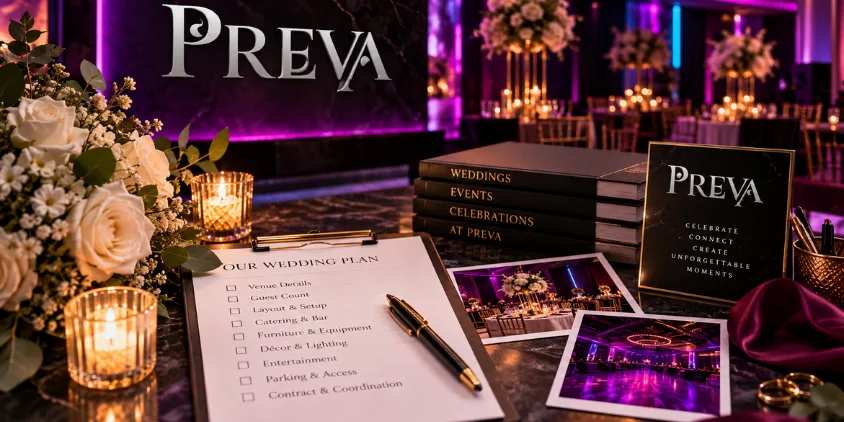
PREVA’s private party venue planning guide for additional questions to consider when organizing a private event.
Frequently Asked Questions
1. What are the most important questions to ask a wedding venue?
Ask about wedding capacity, total cost, available dates and times, ceremony and reception options, catering, alcohol, vendor policies, décor restrictions, entertainment requirements, parking, accessibility, setup time, staffing, cancellation policies, and payment terms.
2. Should you know your guest count before booking a wedding venue?
You do not need your final RSVP number, but you should have a realistic estimate. Guest count affects room layout, catering, seating, pricing, and whether a venue is suitable for your wedding.
3. How far in advance should you book a wedding venue?
There is no single timeline that applies to every wedding. Availability depends on the venue, season, day of the week, location, and popularity of your preferred date.
Begin researching once you have an approximate date, guest count, location, and budget, and ask venues directly about current availability.
4. What should you check before paying a wedding venue deposit?
Review the exact event date, booked spaces, event times, deposit terms, payment schedule, cancellation and postponement policies, included services, catering and bar requirements, vendor rules, guest capacity, setup and breakdown requirements, and all additional fees.
5. Is a venue coordinator the same as a wedding planner?
Not necessarily. A venue representative may focus primarily on venue-related responsibilities, while a wedding planner may coordinate the broader wedding day. Ask the venue exactly what its coordinator or event contact will handle.
6. Can a restaurant or nightlife venue host a wedding reception?
Potentially, but couples should verify wedding-specific arrangements directly with the venue. Confirm private-event capacity, room layout, catering, bar service, entertainment, privacy, event timing, vendor policies, pricing, and any wedding-specific services before booking.